Filtration System
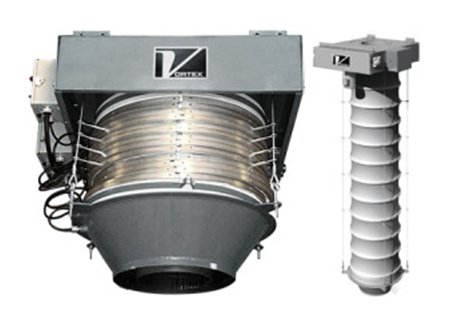
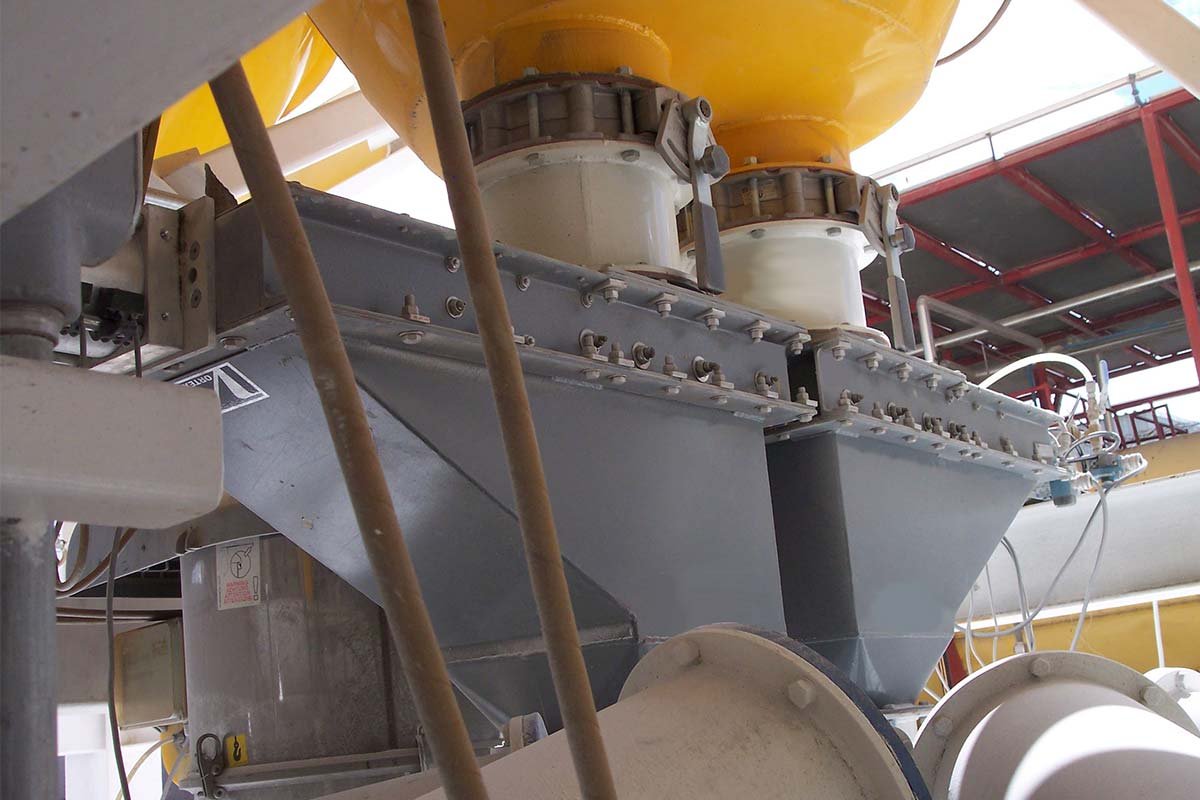
Vortex® dustless spout filtration systems are engineered to capture fugitive dust emitted from the spouts and return it to the material flow during the loading process, thereby eliminating material loss.
Información general del producto
Vortex® dustless spout filtration systems are engineered to capture fugitive dust emitted from the spouts and return it to the material flow during the loading process, thereby eliminating material loss.
• Reverse pulse jets self-clean the filter cartridges
• Air exhaust filter caps
• Low profile for installations in limited spaces
• In-line maintenance features
• Magnehelic® pressure gauges provide differential pressure readings. When a high differential pressure is indicated, the filter cartridge needs to be serviced or replaced
• More cost-effective than central dust collection systems
• The panels are hinged and secured by a stationary clamping mechanism with a handle to speed up inspection and maintenance, and to allow access to the interior without tools
Designed to collect fugitive dust through air extraction. Once the loading process begins, the attached blower draws in fugitive dust as it is generated by the material flow. Upon reaching the In-Line Filtration System, the fugitive dust is captured in a series of pleated polyester filter cartridges. Throughout the loading process, automatic reverse pulse jets inject compressed air to blow the captured dust back into the load. Thus, the In-Line Filtration System is designed to minimize product loss and prevent dust from being released into the atmosphere. *To reduce energy consumption, compressed air is only forced through the reverse pulse jet system during loading operations. It is not a continuously running system.
Reverse pulse jets self-clean the filter cartridges
Low profile for installations in limited spaces
Magnehelic® pressure gauges provide differential pressure readings. When high differential pressure is indicated, the filter cartridge must be serviced or replaced.
More cost-effective than central dust collection systems
The panels are hinged and secured by a stationary clamping mechanism with a handle to speed up inspection and maintenance processes and to allow access to the interior without tools
304 stainless steel, 316L stainless steel, A36 mild steel, ceramic-lined steel, chromium carbide
VFS-10 Air withdrawal capacity: • 400 ft³/min (CFM) • 680 m³/hr (CMH) Total cartridge filters: 4 VFS-25 Air withdrawal capacity: • 1,000 ft³/min (CFM) • 1,700 m³/hr (CMH) Total cartridge filters: 8 VFS-40 Air withdrawal capacity: • 1,600 ft³/min (CFM) | 45 m³/min (CMM) • 96,000 ft³/hr (CFH) | 2,720 m³/hr (CMH) • 77,140 bushels/hr Total cartridge filters: 8
Pleated, spun-bonded polyester media Efficiency ratings (based on dry dust particle sizes): • 1/2 micron: 99.7% efficiency • 1 micron: 99.8% efficiency • 2 microns: 100% efficiency Emission ratings (based on dry dust particle sizes): • 1/2 micron and larger: No more than 0.005 grains/dscf of air PTFE-coated media Emission ratings (based on dry dust particle sizes): • 1/2 micron and larger: No more than 0.004 grains/dscf of air
Vortex Filtration Systems vs. Alternatives
• Central dust collection systems often require the installation of additional ductwork, a discharge airlock, and a means of disposing of collected dust—or a way to reintroduce collected dust back into the manufacturing process. The Vortex® In-Line Filtration System is more cost-effective than central dust collection systems because it is a self-contained unit. • Compared to central dust collection systems, the Vortex In-Line Filtration System performs better. This is because central dust collection systems are exactly that: centralized. Often, the central dust collector is located far from the loading point. A central dust collector also serves other equipment throughout the process, creating multiple “pick-up points” in the dust collection system. To connect the central dust collector to each of these processes, ductwork can become lengthy and have many bends. In addition, faulty connections may allow air and dust to escape into the atmosphere. Each of these factors can affect the strength and balance of air extraction, which limits the overall performance of a dust collection system. Because the Vortex In-Line Filtration System is a self-contained unit that keeps captured dust at the point of loading, it ensures that air extraction strength and other performance factors remain constant. • Central dust collection systems often incorporate larger exhaust blowers, typically ranging from 20 to 100 horsepower (HP)—and sometimes even larger. Because central dust collection systems also support other stages in the process, the exhaust blowers run almost constantly—even when loading operations are not taking place. This results in high electricity consumption. In contrast, the Vortex In-Line Filtration System features a standalone exhaust blower that runs only during loading operations. Therefore, the Vortex In-Line Filtration System significantly reduces energy costs. • Other in-line filtration systems available on the market have bulky designs, making them difficult to install in applications with limited space. The Vortex In-Line Filtration System’s compact, square-shaped design is ideal for installations with limited space. • Other in-line filtration systems available on the market have horizontally mounted filter cartridges, which allow heavy, high-density dust to accumulate in the filters. This dust may not be dislodged by pulse cleaning. To address this issue, the filter cartridges can be periodically accessed and maintained to help dislodge the dust—but this recreates the original workplace safety problem of employee dust exposure and its potential health risks. The Vortex In-Line Filtration System’s filter cartridges are mounted vertically, allowing dust to release from the filter pleats without having to overcome gravity. This reduces the load on the filter cartridge and helps extend its service life. Vertical mounting also reduces employee dust exposure, since the filter compartments need to be opened only for filter cartridge replacement or infrequent maintenance. • The Vortex In-Line Filtration System is not a dust “collector”; it is a dust “filter.” The primary difference is that with the Vortex In-Line Filtration System, dust is temporarily captured before being purged back out of the filter cartridges and back into the material flowstream. By better managing dust at the point of loading instead of routing it to a central dust collection system, the following benefits result: • Improved profitability by shipping the dust as a product rather than moving it to a central dust collector as waste. • By continuously purging dust back out of the filters, the filters remain clear, extending their service life. • If a central dust collection system’s waste storage container is not regularly emptied, dust can build up in the system and cause clogs. This can result in dust overflow, which may cause dust to escape into the atmosphere and create potential hazards in the workplace. Because the Vortex In-Line Filtration System is a self-contained unit that continuously filters and reintroduces dust back into the material flow stream—rather than collecting it—this concern is addressed. • Many in-line filtration systems include two spiral hoses at each filter cartridge: one hose to force compressed air into the filter cartridges, and a second hose to exhaust spent air out of the filter cartridges. Over time, these hoses can rot and crack, which may cause failures in the reverse pulse jet system. To reduce the need for spare parts and other maintenance costs, the Vortex In-Line Filtration System has replaced the second (exhaust) hose with an exhaust cap. The exhaust cap draws spent air directly through the filter cartridge before it is exhausted into the atmosphere.
Datos para evaluación técnica.
Aplicaciones
- • Central dust collection systems often require the installation of additional ductwork
- a discharge airlock
- and a way to dispose of the collected dust—or
- a way to reintroduce collected dust back into the manufacturing process. The Vortex® In-Line Filtration System is more cost-effective than central dust collection systems because it is a self-contained unit. • Compared to central dust collection systems
- The Vortex In-Line Filtration System is a more efficient unit. This is because central dust collection systems are exactly that: centralized. Often,
- The central dust collector is located away from the loading point. A central dust collector also serves other equipment throughout the process
- which creates multiple “pick-up points” in the dust collection system. In order for the central dust collector to be connected to each of these processes
- Ductwork can be long and have many bends. In addition
- Faulty connections may allow air and dust to escape into the atmosphere. Each of these factors can affect the strength and balance of air extraction.
- which limits the overall performance of a dust collection system. Because the Vortex In-Line Filtration System is a self-contained unit that keeps captured dust at the point of loading
- It ensures that the air extraction rate and other performance factors remain constant. • Central dust collection systems often incorporate larger exhaust blowers
- typically ranging from 20 to 100 horsepower (HP)—and sometimes
- even larger. Because central dust collection systems also support other stages in the process
- The exhaust blowers run almost constantly—even when no loading operations are taking place. This results in high electricity consumption. Alternatively
- The Vortex In-Line Filtration System features a stand-alone exhaust blower that runs only when loading operations are in progress. Therefore
- The Vortex In-Line Filtration System significantly reduces energy costs. • Other in-line filtration systems available on the market have bulky designs
- making them difficult to install in applications with limited space. The Vortex In-Line Filtration System’s compact
- The square-shaped design is ideal for installations with limited space. • Other in-line filtration systems available on the market have horizontally mounted filter cartridges
- which allow heavy
- High-density dust can accumulate in the filters. This dust may not be dislodged by pulse cleaning. To address this issue
- The filter cartridges can be accessed and maintained periodically to help dislodge dust—but this recreates the original workplace safety problem of employee dust exposure and its potential health risks. The Vortex In-Line Filtration System’s filter cartridges are mounted vertically to allow dust to release from the filter pleats without having to fight gravity. This reduces the load on the filter cartridge and helps extend its service life. Vertical mounting also reduces employee dust exposure.
- since the filter compartments should only be opened to replace filter cartridges or for occasional maintenance. • The Vortex In-Line Filtration System is not a dust “collector”
- It is a dust “filter.” The main difference is that with the Vortex In-Line Filtration System
- Dust is temporarily captured before being blown back out of the filter cartridges and back into the material flowstream. By better managing dust at the point of loading instead of routing it to a central dust collection system
- It results in the following benefits: • Improved profitability by shipping the dust as a product
- rather than sending them to a central dust collector as waste. • By continuously blowing dust out of the filters
- It keeps the filters clean and extends their service life. • If the waste storage container of a central dust collection system is not emptied regularly
- Dust can accumulate in the system and cause clogs. This can result in dust overflow.
- which may cause dust to escape into the atmosphere and create potential hazards in the workplace. Because the Vortex In-Line Filtration System is a self-contained unit that continuously filters and recirculates dust back into the material flow stream
- rather than gathering dust
- this concern is addressed. • Many in-line filtration systems incorporate two spiral hoses at each filter cartridge: one hose to force compressed air into the filter cartridges
- and a second hose to vent the used air back out of the filter cartridges. Over time
- These hoses can rot and crack
- which may cause malfunctions in the reverse pulse jet system. To reduce the need for spare parts and other maintenance costs
- The Vortex In-Line Filtration System has replaced the second (exhaust) hose with an exhaust cap. The exhaust cap draws used air directly through the filter cartridge before it is vented to the atmosphere.
También puede interesarle.
 Spanish
  English