Aero-Slide Conveyor
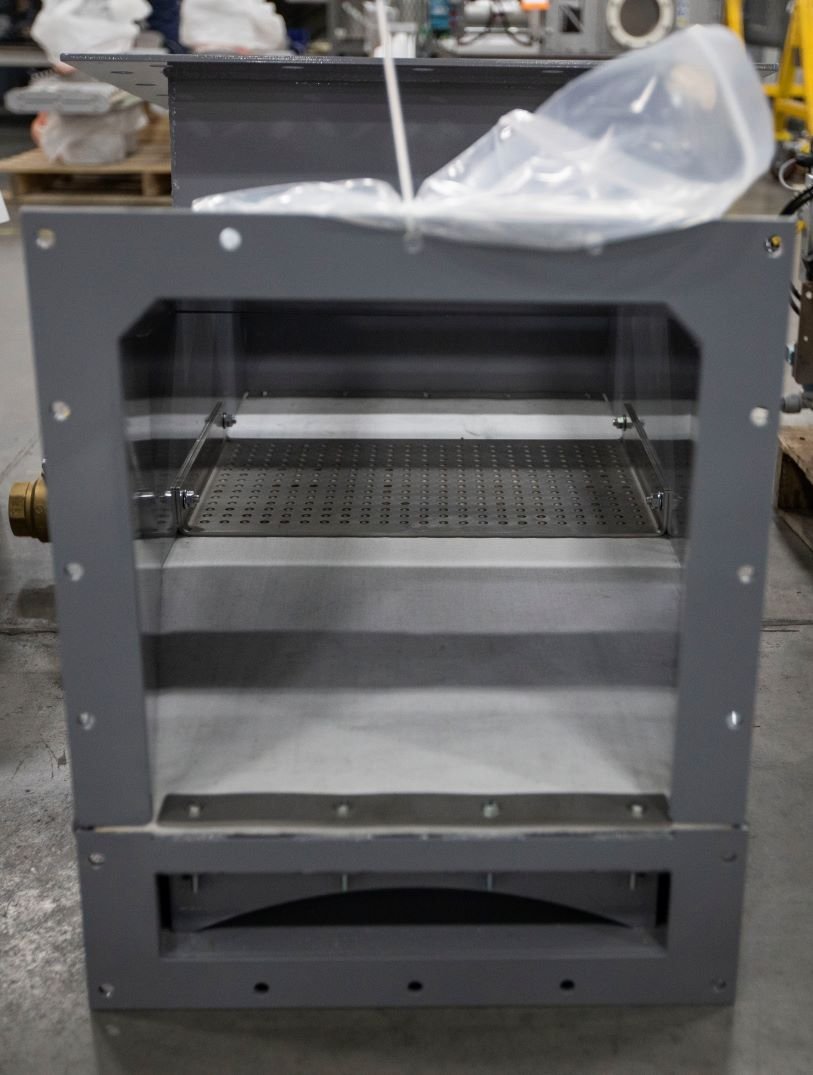
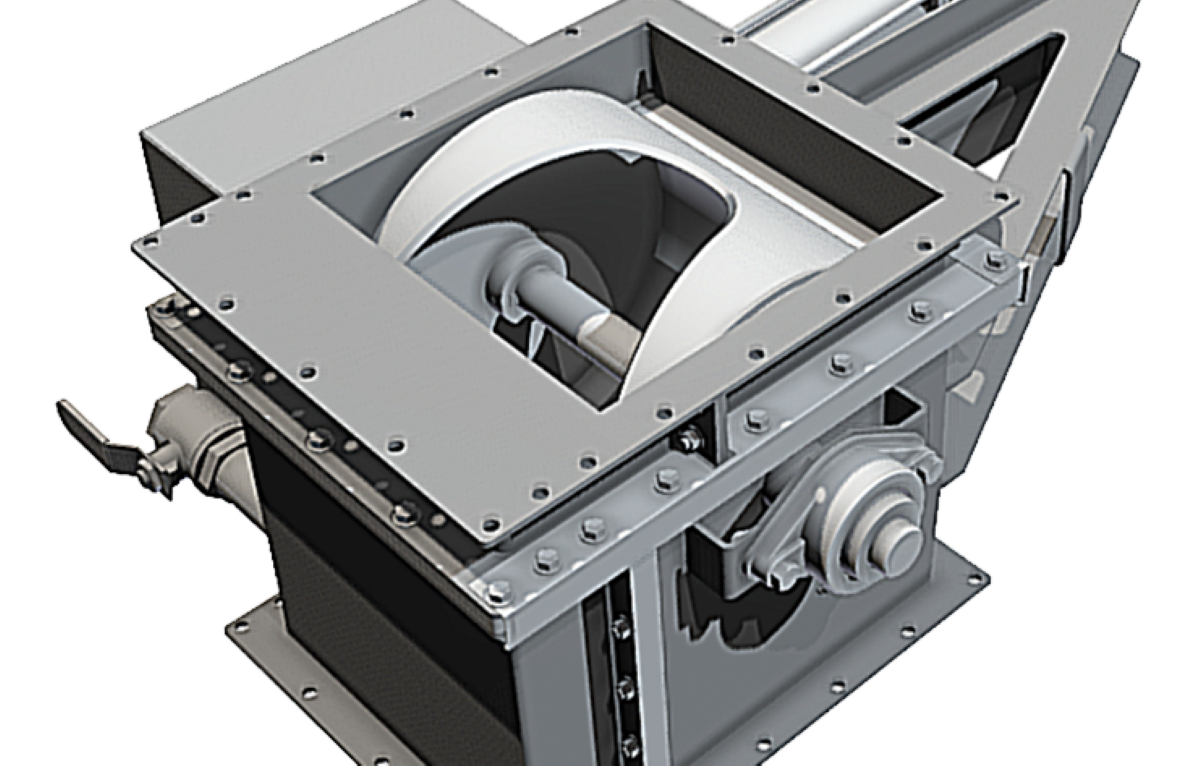
The Vortex® Aero-Slide™ Conveyor consists of a rectangle-shaped convey line which is horizontally separated by an air-permeable, porous media to create an upper and lower chamber. To encourage material flow, the Aero-Slide Conveyor is installed at a slight downward slope – typically 6-8° from horizontal. In the upper chamber, handled materials are transferred along the porous media.
Información general del producto
The Vortex® Aero-Slide™ Conveyor consists of a rectangle-shaped convey line which is horizontally separated by an air-permeable, porous media to create an upper and lower chamber. To encourage material flow, the Aero-Slide Conveyor is installed at a slight downward slope – typically 6-8° from horizontal. In the upper chamber, handled materials are transferred along the porous media.
• Porous media is supported by a durable steel grate
• Cleanout ports to inspect for product in the lower air chamber and maintain, if necessary. Each section of the conveyor has a cleanout port, located along the bottom of the lower air chamber
• Rain ledge prevents precipitation from leaking into the conveyor
• Inlet ports with ball valves to adjust the amount of air being injected into the air-gravity conveying system. Each section of the conveyor has inlet ports, located along the side of the lower air chamber
• Several options for porous media material of construction, based on application and material characteristics
• Viewports for in-line inspection. Each section of the conveyor has a viewport, located along the top of the upper chamber
• Can have infinite length, depending on available head space
• Simple installation and low maintenance requirements
• No moving parts –for operator safety, reduced wear and prolonged service life
• Low energy consumption using a single power source (electricity to power the fan or blower, no plant air required)
Porous media is supported by a durable steel grate
Cleanout ports to inspect for product in the lower air chamber and maintain, if necessary. Each section of the conveyor has a cleanout port, located along the bottom of the lower air chamber
Rain ledge prevents precipitation from leaking into the conveyor
Inlet ports with ball valves to adjust the amount of air being injected into the air-gravity conveying system. Each section of the conveyor has inlet ports, located along the side of the lower air chamber
Several options for porous media material of construction, based on application and material characteristics
Viewports for in-line inspection. Each section of the conveyor has a viewport, located along the top of the upper chamber
Can have infinite length, depending on available head space
Simple installation and low maintenance requirements
No moving parts –for operator safety, reduced wear and prolonged service life
Low energy consumption using a single power source (electricity to power the fan or blower, no plant air required)
Lightweight, fluidizable dry bulk solid powders
< 1% (Otherwise, materials can become too heavy to transfer and/or can harden inside the conveyor, creating blockages.)
180°F | 80°C for standard conveyor, with modifications that allow up to 400°F | 205°C
304 stainless steel, 316L stainless steel, A36 mild steel
Needled polyester, stainless steel media, porous stone, plastic
Media Support Grate Construction Options
A36 mild steel, 304 or 316L stainless steel
Low pressure; air-gravity conveyance only
Dry air, using a centrifugal pressure blower or a positive displacement blower. Regulated compressed air from the plant service air system can contain moisture and/or oil, which can combine with materials and create clogs along the porous media.
Available in square or rectangular sizes
Standard flange pattern, ANSI, DIN, JIS Custom flanges are available
Vortex Aero-Slide Conveyor vs. Alternatives
• Alternative air-gravity conveyors offered by the industry incorporate a woven fabric media. A primary disadvantage to woven materials is they can be easily unraveled, cut, have holes punched in them, or otherwise damaged. This results in frequent and expensive downtime for media replacement. To address this durability issue, the Vortex Aero-Slide Conveyor incorporates a needled polyester fabric media as a standard. • Alternative air-gravity conveyors offered by the industry incorporate cross bars or metal screens beneath the porous media to provide it with additional structure and support. Often times, the gap between cross bars is too large, or the metal screens are simply too flimsy to support the weight of the material(s) handled. In either case, the porous media will begin to sag and create “dead spots” where materials become trapped along the conveyor. This creates conveying inefficiencies. For improved media support, the Vortex Aero-Slide Conveyor incorporates a durable steel grate beneath the porous media. The grate features equally spaced, intersecting cross bars which run latitudinal and longitudinal to the porous media. • At the ends of each section of an air-gravity conveyor,media retainers ensure the porous media stays firmly in place. Alternative air-gravity conveyors offered by the industry use pop rivets to fasten the media retainers. Overtime, pop rivets tend to wear and break, creating an airpath issue within the conveyor. For added durability, the Vortex Aero-Slide Conveyor instead uses bolts to fasten the media retainers. Additional Considerations: • Outdoor installation or non-climate controlled indoor installation: Overnight temperature drops may create condensation within the conveyor. If materials are transferred through the conveyor before condensation has escaped, moisture can combine with dry bulk solid materials and create clogs along the porous media; or,moistened materials can harden and create blockages in the conveyor. • For proper function, the porous media must be undamaged and must span the full length and width of the Aero-Slide Conveyor. Otherwise, materials can migrate into the lower chamber and disturb the aeration path, which creates conveying inefficiencies.
Datos para evaluación técnica.
Aplicaciones
- Several options for porous media material of construction
- based on application and material characteristics
- • Alternative air-gravity conveyors offered by the industry incorporate a woven fabric media. A primary disadvantage to woven materials is they can be easily unraveled
- cut
- have holes punched in them
- or otherwise damaged. This results in frequent and expensive downtime for media replacement. To address this durability issue
- the Vortex Aero-Slide Conveyor incorporates a needled polyester fabric media as a standard. • Alternative air-gravity conveyors offered by the industry incorporate cross bars or metal screens beneath the porous media to provide it with additional structure and support. Often times
- the gap between cross bars is too large
- or the metal screens are simply too flimsy to support the weight of the material(s) handled. In either case
- the porous media will begin to sag and create “dead spots” where materials become trapped along the conveyor. This creates conveying inefficiencies. For improved media support
- the Vortex Aero-Slide Conveyor incorporates a durable steel grate beneath the porous media. The grate features equally spaced
- intersecting cross bars which run latitudinal and longitudinal to the porous media. • At the ends of each section of an air-gravity conveyor
- media retainers ensure the porous media stays firmly in place. Alternative air-gravity conveyors offered by the industry use pop rivets to fasten the media retainers. Overtime
- pop rivets tend to wear and break
- creating an airpath issue within the conveyor. For added durability
- the Vortex Aero-Slide Conveyor instead uses bolts to fasten the media retainers. Additional Considerations: • Outdoor installation or non-climate controlled indoor installation: Overnight temperature drops may create condensation within the conveyor. If materials are transferred through the conveyor before condensation has escaped
- moisture can combine with dry bulk solid materials and create clogs along the porous media
- or
- moistened materials can harden and create blockages in the conveyor. • For proper function
- the porous media must be undamaged and must span the full length and width of the Aero-Slide Conveyor. Otherwise
- materials can migrate into the lower chamber and disturb the aeration path
- which creates conveying inefficiencies.
También puede interesarle.
 Spanish
  English